IT Aduit & Assessment - Case 1

A cross boarder toy firm with head-office in Hong Kong and factory in China

Size
3000+ Employees

Service
IT Audit and Assessment with Follow-up Services

Challenge
In recent years, with the aggressive growth of China’s economy and businesses, many are struggling to cope with oversea management and security. Our client is no other. An out-dated ERP and a handicapped HR system have cost our client direct money lose. An IT team that are too busy fixing endless users’ daily problems, managers find it almost impossible to communicate and express their business directions and objectives. Internal hacking activities with data and network security issues are present. With a continuous reminder from the news of data leakage and loss, managers have turned to our IT audit and service scheme to evaluate in both technical and business aspects. 

Solution
Identify numerous network security holes and provide technical recommendations. Evaluation of mission critical ERP on technical architectural analysis specifying potential risks and possible automation strategy. Enhance the network control and monitoring with the consolidation of IT management and policies.

Result
With the submission of the management report of our findings, impacts, severity levels and recommendations, a meeting is held with the management team to run through each finding, some includes:
 - Identification of security holes within their multi-sites setup in both network and application aspects.
 - Core business ERP system running a 2-tier hierarchy, any users may delete all system data under a press of the delete button.
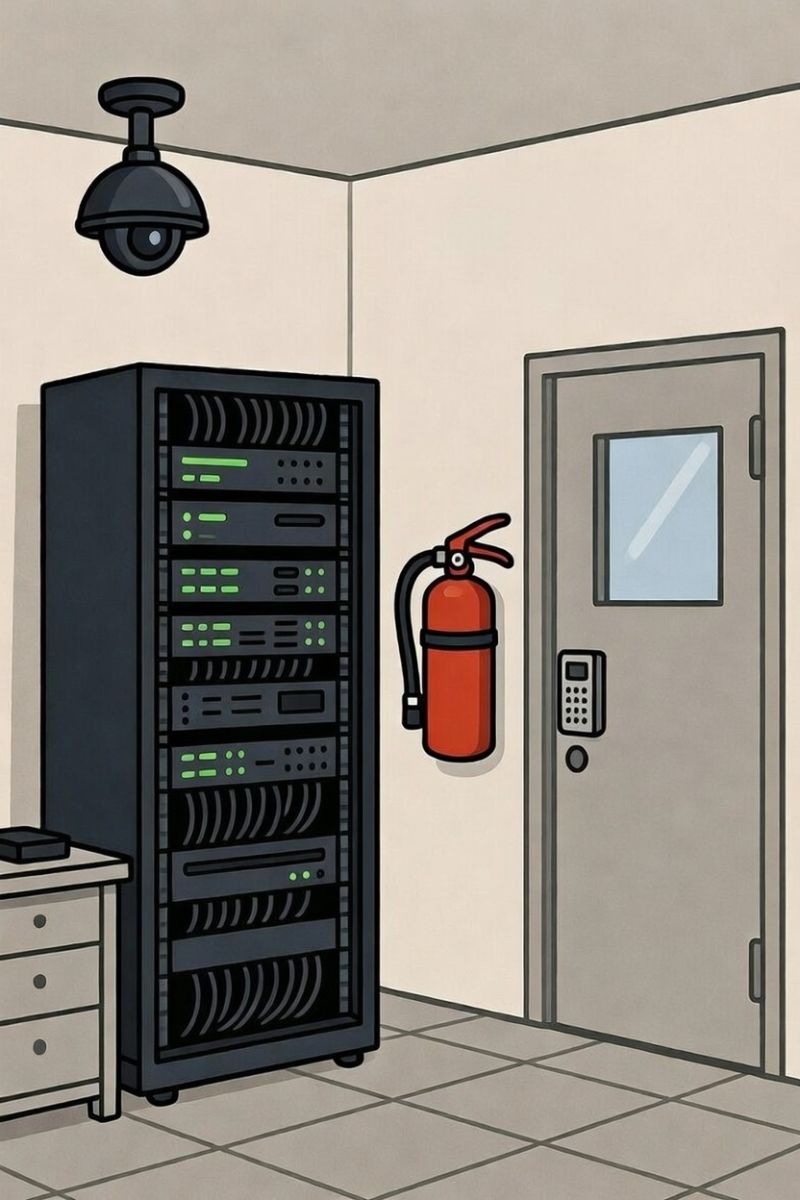
 - Insufficient and ineffective configurations of firewall causing managers’ personal desktops and servers vulnerable to hackers.

Follow-up
Reduce potential security holes with an up-to-date centralized monitoring and administration system. Temporary work around method to protect data. Awareness of new options in ERP systems with pertinent professional advice. Establishment of new policies and procedures in protection of the company.

Our team thereafter, proposes a range of IT services providing a one stop solution of our client. Some of our services include:
 •    Immediate handling of high severity objects to minimize risks including firewall configurations and ERP data protection.
 •    In-place a centralized administration and network monitoring systems to govern and simplify IT administration.
 •    Sources different options of ERP’s providing pertinent professional advice.
 •    Establishment of new policies and procedures in protection of the company.
 
Benefit
After the running of our IT Audit and Services Scheme, the workload is centralized and eased by the new establishment of administration and network monitoring systems. The management team has much of a better overview of IT and the current environment in both security and business growth aspects. With the establishment of policies and procedures, a clear guideline is defined and a regular communication channel between management and IT is established.

More Updates

Further reading

Speed Without the Sprawl

Leveraging OutSystems' rapid development strengths, our team achieves true Agile development, focusing intensely on user requirements. However, requirements are never fixed; they take time to refine within the project's cycle. If a developer simply builds projects based on the initial requirements, it leads to significant rework when those requirements are inevitably revised. This creates serious technical debt that can derail a project's schedule. To combat this, we strictly follow the OutSystems Canvas Design architecture to define each module's usage and content. We generalize logic into foundational modules, optimizing reusability and providing high adaptability when requirements change. This approach allows us to eliminate complicated dependencies—avoiding the deployment nightmares that plague monolithic systems. The Real-World Challenge: "The Spaghetti Monolith" We’ve all seen it. A project starts fast. The "Idea-to-App" time is record-breaking. But as sprints pass and requirements evolve, the "interest rate" on technical debt spikes. Suddenly, changing a simple UI element breaks a core business process because the logic was trapped inside the screen. Deployment becomes a "big bang" event where everything must go live at once because of circular dependencies. In our team, we don't just "code fast"; we architect for resilience. Our Solution: The 4 Layer Canvas Strategy We treat the 4 Layer Canvas not just as a suggestion, but as our structural imperative. Here is how we use it to handle volatile requirements:  Isolating Volatility (End-User Layer): We keep our User Interfaces (UI) and interaction logic in the End-User Layer. This layer is highly volatile—it changes constantly based on user feedback. By isolating it, we can redesign a "Customer Portal" without risking regressions in our core business rules.Stabilizing Business Logic (Core Layer): We abstract our entities and business rules into the Core Layer. This is the backbone of our factory. Whether the data is accessed by a Mobile App, a Web Portal, or a Timer, the validation rules remain consistent. This promotes the "Don't Repeat Yourself" (DRY) principle.Enabling Independent Deployments: By using Service Actions (Weak Dependencies) in our Core layer, we decouple our modules. This allows different squads to deploy changes independently without forcing a factory-wide refresh—a critical enabler for our CI/CD pipelines.The Governor: AI-Driven Architecture How do we ensure we stick to these rules when moving at Agile speeds? We don't just rely on manual code reviews; we use the AI Mentor System. This tool acts as our automated architect. It scans our entire factory to detect architectural violations that humans might miss, such as: Upward References: Preventing foundational libraries from depending on business logic.Side References: Ensuring our End-User apps don't tightly couple with one another.Circular Dependencies: Identifying the "deadly embrace" between modules that locks deployments.The AI Mentor System quantifies this debt, allowing us to pay it down proactively before it hinders our release velocity. Join a Team That Values Architecture In our Taiwan office, we believe that low-code doesn't mean "low-architecture." We are building resilient, composable enterprise ecosystems that can scale. If you are a developer who cares about structural integrity, clean code, and mastering the art of OutSystems architecture, we want to hear from you.