𝗟𝗼𝘄-𝗖𝗼𝗱𝗲 𝗦𝘆𝘀𝘁𝗲𝗺𝘀 𝘃𝘀. 𝗔𝗜 𝗶𝗻 𝗣𝗿𝗼𝗷𝗲𝗰𝘁 𝗜𝗺𝗽𝗹𝗲𝗺𝗲𝗻𝘁𝗮𝘁𝗶𝗼𝗻
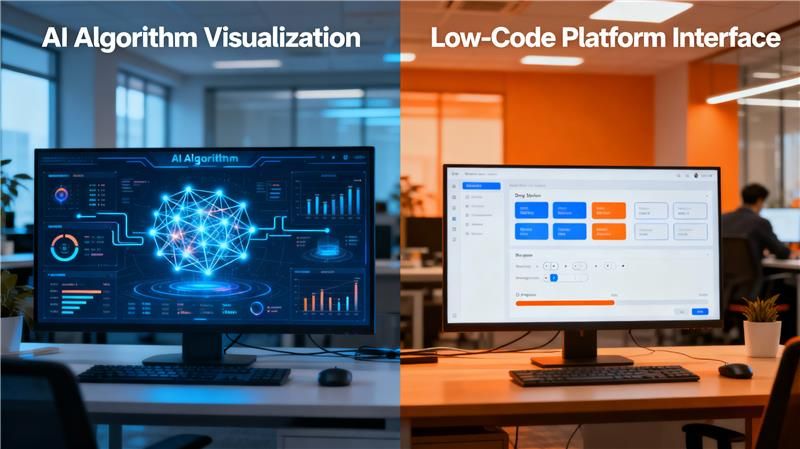
The Monday Morning Reality Check: Why AI Alone Won't Ship Your Project
We've all seen the marketing buzz: "Let AI build your application." It sounds magical until 2 AM when your critical feature fails and ChatGPT's generated code is throwing errors nobody understands.
I learned this lesson during a recent sprint. Our team leveraged AI to accelerate delivery. The promise was clear: faster results, fewer developers needed. The reality? We spent three times longer debugging inconsistent outputs, fixing security vulnerabilities the model missed, and explaining why the "AI-built" system couldn't handle edge cases.
🔎 Here's what AI got wrong:
𝘾𝙤𝙣𝙩𝙚𝙭𝙩 𝙗𝙡𝙞𝙣𝙙𝙣𝙚𝙨𝙨 – AI generates code in isolation, unaware of your infrastructure, compliance requirements, or unique business logic. We discovered this when AI suggested database patterns that violated GDPR regulations.
𝘼𝙘𝙘𝙤𝙪𝙣𝙩𝙖𝙗𝙞𝙡𝙞𝙩𝙮 𝙜𝙖𝙥𝙨 – When production breaks, who owns it? This ambiguity creates chaos instead of solutions.
𝘾𝙤𝙣𝙛𝙞𝙙𝙚𝙣𝙩 𝙝𝙖𝙡𝙡𝙪𝙘𝙞𝙣𝙖𝙩𝙞𝙤𝙣𝙨 – AI works for simple components but struggles with complex architecture. It generates solutions that look correct but fail under real-world conditions.
𝘾𝙤𝙨𝙩 𝙞𝙡𝙡𝙪𝙨𝙞𝙤𝙣 – You're not replacing developers; you're adding debugging work. Time saved on initial generation evaporates during testing and validation.
The Low-Code Difference:
Low-code platforms deliver what AI cannot: deterministic, auditable solutions. Your team controls architecture. Every decision is traceable. You get transparency, governance, velocity, and enterprise-grade reliability.
The best approach? Augment, don't replace. Use AI for research, but build critical systems with low-code platforms that give you control, auditability, and accountability.
Your production systems deserve better than confident hallucinations.
Further reading